
SILTECH SAGA-SYSTEM
Jonathan Valin, januar 2014

MILEPRESTASJON
Selv om andre (inkludert noen i dette bladet) ser ut til å tro at vi bare har satt tiden på prøve innen high-end-lyd i det siste, bygget og gjenoppbygd de samme gamle tingene bare med bedre deler og kalt dem «gjennombrudd», så må jeg bli optimist. Jeg tror oppriktig at hi-fi, og kvaliteten og oppfinnsomheten i ingeniørkunsten bak, aldri har vært høyere enn den er i dag. Slør som vi har tatt for gitt i mange år (fordi de var så lave og så allestedsnærværende at vi ikke skjønte at de var der – før de ikke var det) blir hørbart løftet, forvrengninger og farger reduseres. Som et direkte resultat blir en overflod av nye, tidligere uhørte detaljer om musikk og musikere (og selve innspillingsprosessen) gjort tydeligere, eller tydeligere. Selvfølgelig ser det ut til at noen (inkludert, nok en gang, noen i akkurat dette bladet) tror at slike ferske detaljer er en slags falsk gud – produktet av enten en hypet øvre mellomtone og diskant, eller en kul vintage Neumann-mikrofon (Gud bevare oss fra disse, forresten, og de rett og slett forferdelige opptakene fra RCA, Mercury og Decca som ble gjort med dem), eller propagandaen til en dust som meg som rett og slett ikke vet bedre enn å glede seg over å høre ting han aldri har hørt før på opptak han har lyttet til utallige ganger. Det virker ikke til særlig nytte å påpeke (som jeg har gjort gjentatte ganger) at jeg ikke gleder meg over å høre ferske detaljer for deres egen skyld, men snarere fordi de til sammen gir en mer overbevisende illusjon av den ekte varen. Eller å argumentere for at slike detaljer kan være betydelig mindre trivielle enn lydene av knirkende stoler i fiolinseksjonen eller sider med partiturer som slås på piano-noter eller T-banevogner som kjører under innspillingssteder (selv om det er en audiofil del av meg som utvilsomt også fryder seg over å høre disse tingene) – at det å høre for eksempel en Bartók-pizzicato høres ut som en Bartók-pizzicato ikke bare utgjør en betydelig forskjell i realismen som klangfargen, varigheten og intensiteten til tonen spilles med, men en like betydelig forskjell i vår forståelse av musikken den tegnsetter og vår verdsettelse av ferdighetene til utøveren som spiller den musikken. Alt dette, tro det eller ei, er som et forord til anmeldelsen du er i ferd med å lese av et produkt – faktisk et system med tre produkter – som løfter slør, senker forvrengninger, avslører nye detaljer, og ja, forsterker illusjonen av realisme. Dette produktet, kalt Siltech SAGA System, ble designet av Edwin van der Kley Rynveld, den begavede nederlandske ingeniøren som mange av oss kjenner fra sitt banebrytende arbeid med kabler og sammenkoblinger (inkludert mine nåværende referanseledninger, Crystal Cable Absolute Dreams). Det viser seg at Edwin, som jeg besøkte for ikke så lenge siden i Arnhem i Nederland (ja, det Arnhem – broen står fortsatt, forresten) som en oppfølging til min Crystal Cable-anmeldelse, er betydelig mer enn en metallurg i verdensklasse, selv om han også er det. Han er en svært erfaren ingeniør med en forkjærlighet for å bygge nye høyttalere (de glasslignende Crystal Cable Arabesques er hans nyeste), og like nyskapende elektronikk. For flere år siden forfattet Edwin SETA, en 80 W monoblokkforsterker med single-ended triode som brukte spesialbygde rør. SETA og dens tilhørende forforsterker gjorde ikke noe stort inntrykk på det verdensomspennende elektronikkmarkedet (bare 30 par av forsterkerne ble noen gang laget), men de var likevel høyt ansett og fikk svært gode anmeldelser. Imidlertid ikke like høyt ansett eller like godt anmeldt som hans nåværende SAGA System-elektronikk, som allerede har blitt skrytt av i flere magasiner og nettmagasiner, og snart vil bli skrytt av igjen av meg. Hva er et SAGA System? Det er en veldig dyr elektronikkpakke med tre rør/transistor-hybrid-enheter, til 112 500 dollar, bestående av en linjetrinnsforforforsterker og en stereoforsterker på 380 Wpc (i 8 ohm) med et svært uvanlig design. Selv om det kanskje ikke er noe nytt under hi-fi-solen, slik noen (inkludert noen i dette bladet) hevder, er SAGA System utvilsomt annerledes nok til å fortjene en lang forklaring, både av hva det er og hvorfor det er som det er.
La oss ta hvorfor-delen først.
SAGA er den heldige initialiseringen av det Rynveld kaller strukturell forsterkerforsterkningsarkitektur. Og strukturell forsterkerforsterkningsarkitektur er det linjetrinnsforforsterkeren hans (C1) og hans toboksforsterker (V1 og P1 – årsaken til de to boksene vil bli forklart om et øyeblikk) eksemplifiserer. SAGA-komponentene er designet for elektrisk og mekanisk å revidere og lydmessig forbedre det Rynveld kaller «den gamle vanen»-forsterkningsarkitekturen til forforsterkere og forsterkere fra fortiden, inkludert omtrent alle andre forforsterkere og forsterkere på markedet i dag. Ifølge Mijnheer Rynveld er alle disse forforsterkerne fanget i en slags tidsfordre, ved å bruke en forsterkningsarkitektur som ga mening da analog var konge, men som ikke gir like mye mening i den digitale tidsalderen. Du skjønner, tilbake i LP-dagene var jobben til en forforsterker å forsterke det relativt svake signalet fra fonostagen (vanligvis 1 V eller mindre) til linjenivå slik at det kunne sendes videre til forsterkeren for ytterligere forsterkning. I dag er utgangsspenningen til en CD-spiller eller en DAC høy nok (vanligvis 2V) til at den samme forsterkeren blir overstyrt eller overbelastet hvis signalet som sendes til den av forforsterkeren ikke blir det (dvs. hvis forsterkningen som brukes av forforsterkeren ikke er lavere enn enhetsforsterkning). Og faktisk er demping av inngangssignalet nettopp det forforsterkere gjør i dag med digitale kilder, via operasjonsforsterkere, diskrete kretser eller passive dempere. Problemet er at det å redusere spenningen til inngangssignalet slik at det ikke overbelaster forsterkerens inngangstrinn, også reduserer det dynamiske området til signalet – vanligvis med 10dB referert til et linjenivå på 1,5V – og når det dynamiske området senkes, øker hørbarheten av støy siden signal-til-støy-forholdet også har blitt redusert. Når det dynamiske området er tapt, kan det aldri gjenopprettes – uansett hvor mye forsterkning som brukes etter demping. Å eliminere denne uunngåelige reduksjonen av dynamisk område og den påfølgende økningen i støy er hele raison d'être til SAGA-systemet, der hver del av forsterkningsarkitekturen er designet for å imøtekomme den digitale tidsalderens realiteter. C1-forforsterkeren bruker ingen demping på inngangssignalet, og V1/P1-totrinnsforsterkeren er konstruert for å håndtere den økte spenningen til en digital (eller analog, for den saks skyld) kilde uten overbelastning eller klipping, og dermed bevare de tapte 10 dB med dynamisk område, samtidig som den oppfattede lydstyrken omtrent dobles og oppfattet støy halveres. Som Siltech påpeker, er det denne støyen som maskerer de lave (og høye) detaljene i klangfarger, teksturer og transienter som nesten universelt anses som nøkler til sonisk realisme – bortsett fra av noen (inkludert noen i dette bladet). Det er imidlertid et problem med Rynvelds strategi. Når dynamisk område økes og lydstyrken praktisk talt dobles, økes også hørbarheten av "ekstern støy" (i form av RFI, EMI og strømnett-hash). Siden vekselstrømforsyninger er de viktigste kildene til slik ekstern støy, resonnerte Rynveld at det å eliminere dem og i stedet bruke (oppladbare) bly-syre-gel-batterier som strømforsyninger ville løse problemet.
…Edwin kom opp med en mye mer elegant, effektiv og original løsning – en jeg aldri har sett implementert før.
Jonathan Valin
Dessverre førte denne avgjørelsen til et annet problem. Selv om en batteristrømforsyning er fullt mulig i en lavstrømsforforsterker (Edge, Nagra, Veloce, Sutherland og mange andre har brukt dem i årevis), er det et mye vanskeligere alternativ i en effektforsterker. Problemet er at effektforsterkere vanligvis har tre forsterkningstrinn – et inngangstrinn, et drivertrinn og et utgangstrinn – hver med forskjellige strømforsyningskrav. Fordi mengden strøm de bruker er relativt liten, kan inngangs- og drivertrinnene i en effektforsterker mates tilstrekkelig av batterier (med noen få ekstra påfyll). Utgangstrinnet bruker derimot store mengder strøm som raskt ville tappe en batteristrømforsyning; derfor må det drives av vekselstrøm. Siden inngangs-, driver- og utgangstrinnene i en effektforsterker vanligvis er plassert i én boks, blir spørsmålet hvordan du håndterer strømforsyningsbehovene deres samtidig som du holder introduksjonen av ekstern støy til et minimum? Selv om jeg ikke vet dette med sikkerhet, vil jeg anta at Rynveld lekte med ideen om å bruke to eksterne strømforsyninger (ett batteri og én vekselstrøm) til forsterkeren sin, selv om jeg antar at det ville være vanskelig å mate deler av en krets fra en vekselstrømforsyning uten potensielt å forurense resten av kretsen med støy. Til slutt kom Edwin opp med en mye mer elegant, effektiv og original løsning – en som jeg aldri har sett implementert før (selv om jeg forstår at den har blitt prøvd en eller to ganger tidligere).

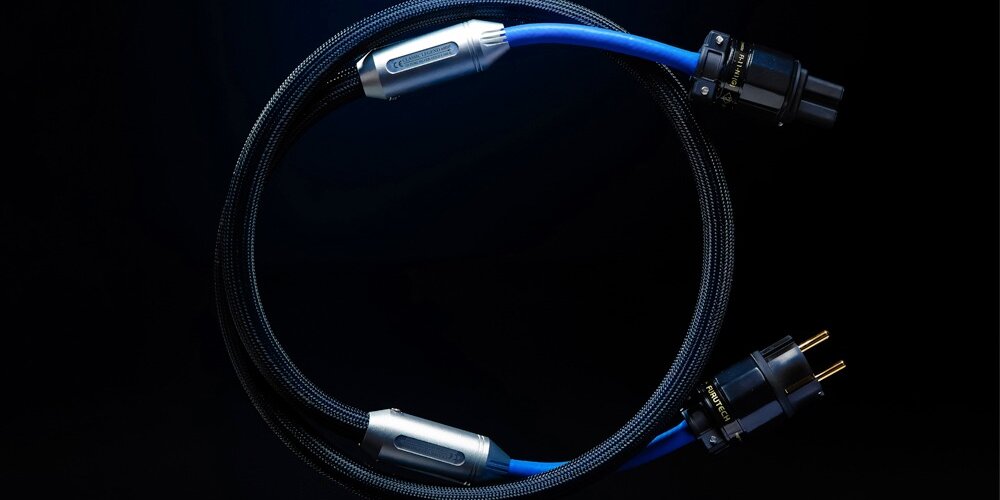
Instead of dividing the power supplies in two, he divided his amp in two, physically separating the input/driver stage (the voltage amplifier or V1 unit) from the output stage (the current amplifier or P1 unit) by housing each in its own separate, massive, heavily damped, beautifully made chassis. This not only allowed the voltage amplifier to be independently powered by batteries; it also insulated and galvanically isolated the low-level signals processed by the V1 (and those of the also separately-housed, battery-powered linestage preamplifier, the C1) from any AC power-supply noise in the current amplifier. If this were the end of Rynveld’s SAGA System innovations, it would suffice us. But ’t’isn’t. All things being equal Rynveld prefers the sound of triode tubes to transistors—and, as noted, has had experience designing triode amplifiers and preamps of the highest quality. However there are issues associated with using tubes in a battery-powered preamp and amp (or half of an amp) that wouldn’t crop up with AC power supplies. For example, typical twin-triode preamplifier tubes such as 12AX7s or 6922s require considerable voltage to operate as designed, and the voltage demands of high-output power tubes such as 6550s or KT120s simply put them out of the question. To get what he wanted sonically Rynveld had to make a series of interesting choices—and a compromise. First, he picked an unusual tube for his C1 preamp, the dual-triode ECC86, designed in 1958 (by Philips and Telefunken) for use in low-voltage environments such as car radios. Not only was this tube ideal for a batterypowered preamplifier—necessarily low in microphony, long-lived, and very rugged, in addition to having the right voltage requirements—Rynveld also (and most importantly) considers it a sonic gem. Four of them are installed in the C1 preamp in a “minimalist,” zero-feedback Class A circuit. Second, he used a high-frequency DC-to-DC converter to up the voltage of his battery power supply in the V1 voltage amp, which, among other things, allowed him to deploy two completely separate, switch-selectable amplifier-input/driver-stage circuits—both tube-powered. One of these circuits uses an E80CC triode, running in Class A, for lowergain (28dB) applications (i.e., higher-sensitivity loudspeakers); the other uses a 18042 pentode for higher-gain (34dB) applications (i.e., lower-sensitivity loudspeakers). The working assumption is that most listeners will prefer the sound of the Class A triode tube (provided their speakers have a sensitivity of about 87dB or higher); I certainly do with the Raidho C 4.1s (though the pentode has its merits, too, for which see the sidebar on using the SAGA System). Both the triode and the pentode are, again, installed in zero-feedback “minimalist” circuits. Third, for his ACpowered P1 current amplifier Rynveld decided to use discrete transistors because driving current is precisely where transistors are at their best. This doesn’t mean that the P1 is a conventional solid-state gain stage, however. As I hope you can see by now, very little about the SAGA System is conventional. Though the P1 gets its power directly from a wall outlet in your listening room, it does not use a typical AC power supply. Since the whole object of the SAGA is to preserve dynamic range and avoid the introduction of noise, internal or external, Edwin chose to use a 160kHz switching power supply with smaller transformers rather than a standard supply with larger E-core or toroidal transformers, thereby sidestepping the problem of noise leaking from the transformer’s primary to its secondary windings and thence into the SAGA System ground plane. Previous experience with today’s highly sophisticated switching power supplies (see my review of the superb Soulution 500 Series electronics in Issue 236) suggests that this was a smart choice with a profound sonic upside (particularly when it comes to bottom-end grip, definition, and speed—areas where even the best tube amps can use a bit of help). In the past, the knock against switching power supplies was that they radiated “switching noise” into the audio circuit— the very thing that Rynveld was trying to guard against. But to judge by the Soulution 501 monoblock amps (and the Siltech SAGA, for that matter), today’s far-moresophisticated, higher-frequency switchmode PSUs no longer have this problem. At least, I can’t hear any trace of it—in either the Soulution gear or the Siltech. [Or in the Rowland 725 amplifiers.—RH] However, partly out of an abundance of caution and partly out of sheer technical hubris, Rynveld took a further step to keep external noise out of his current-stage power amp— what he calls the Apollo LightDrive. This patent-pending bit of engineering brilliance further isolates the power supply from the gain-stage transistors by converting DC into light. An extremely powerful LED (developed for automobile headlights) turns the switch-mode supply’s output into an intense beam of light (so powerful that the LightDrive has to be encased in a light-proof box lest its radiance blind you). This intense beam of light is directed at high-efficiency photocells (developed for use in satellites), which convert it into the current that biases the P1’s bipolar transistors. Like every other part of the SAGA System, those transistors are installed in a zero-feedback circuit that runs in full Class A, even at the 1200W levels the amp is capable of into 2-ohm loads. (The standard strategy for Class A is to prevent the power transistors from ever switching off via bias current that is higher than the peak levels the amplifier is capable of generating. This results is an efficiency of about 10–20 percent, i.e, 80–90 percent of the amp’s output is dissipated as heat. The P1 uses its light-coupled current source to bias the output transistors independent of power demands via the following equation: The P1’s dissipation equals output power plus roughly 50W. Siltech claims that this more conservative biasing strategy prevents the power transistors from switching off, keeps the amp in Class A under all loads, even those under 1 ohm, and allows the amp to run considerably cooler—about 100ºF on the outside of the P1’s chassis—than conventional Class A amps.) In all fairness, using light to bias transistors (and to galvanically isolate the power supply) is not an entirely new idea. The American firm Edge, for one, used a variation of this strategy in its top-line amplifiers back in the late 90s (and I believe that Jürgen Reis of MBL uses opto-couplers in his 9011 monoblocks, which I reviewed several years ago). Nonetheless, when you take all of the innovations in the SAGA System as a whole, even skeptics (including some on this magazine) would have to grant that this is not “the same old thing” spiffed up with new parts. (For that matter, neither are the other innovations we’ve seen over the last few years in speaker and driver design and source components. But that’s another story.) Of course, the proof of the pudding is in the tasting. No matter how ingeniously contrived Edwin’s Structural Amplifier Gain Architecture is—and no matter how sound the reasoning behind it—the SAGA System would simply be another brilliant flash-inthe- pan if it didn’t deliver the sonic goods. As you can guess, since I would hardly have wasted all this space on something that didn’t sound great; it does deliver the sonic goods, sounding just a smidgeon more realistic (in the midrange) than its closest solidstate competitors from Soulution and Constellation and more than a smidgeon quicker and better defined (particularly at the frequency extremes) than its closest tube competitors from ARC or c-j. Indeed, the sound of this Class A hybrid system falls almost exactly in-between that of the highest-fidelity solid-state and the highest-fidelity tubes I’ve heard. Ofttimes in the past this has not been the case with tube/transistor satyrs, which instead of melding the sonic best of both gain strategies seem to highlight their defects and compromise their virtues. Not so here. You can hear what I’m talking about by putting on virtually any good recording of voice, such as Keb’ Mo’ singing “Am I Wrong” and accompanying himself on guitar (with hand-clap and kick-drum accents) from his eponymous first album. If you listen to this cut with a great all-tube setup (say the ARC Reference 10 linestage and Reference 250 power amps), you will be struck immediately by the lifelike timbre of KM’s voice, which simply sounds “right” in a way that nothing else—tube, solid-state, or in this case hybrid— quite equals. Of course, ARC tubes are famously wonderful at getting steady-state tone just-so, particularly in the heart of the midrange, and also at capturing much of the natural dimensionality and bloom of the real thing. If you were to compare this all-tube presentation to the sound of a great all-transistor setup (my reference Soulution 500 Series electronics, for example), you would hear the timbre of KM’s voice darken a bit. The Soulution’s tonal palette is a little more “bottom-up”—e.g., weighted slightly more toward the bass than that of the more dead-center-neutral ARC gear. KM’s voice would also be a little more flattened in aspect than it is through the ARC gear (though it wouldn’t come close to losing all of its dimensionality and bloom, qualities that the Soulution gear is better at reproducing than any other solid-state electronics I’m familiar with). At the same time, the tiny transient details that go such a long way toward recreating the way a real singer is singing—the way he is shepherding his breath, the way he is employing his mouth, nose, throat, and chest to modulate timbre and dynamic, and the way these changes in his delivery contribute to the dramatic effect—would be somewhat more clearly reproduced, making Keb’ Mo’ sound just as “there” but for slightly different reasons. If, in turn, you were to listen to this same cut via the Siltech SAGA System, you would hear vocal and guitar timbre that are much closer to the utter naturalness and neutrality of the ARC electronics (though not quite as fool-ya “right” as the ARC), but you would also hear textures, transient details, decays that are much closer to the utter naturalness and higher resolution of the Soulution electronics (although, perhaps, not quite as “quick” and explosive as the Solution is on the picking of that resonator guitar).
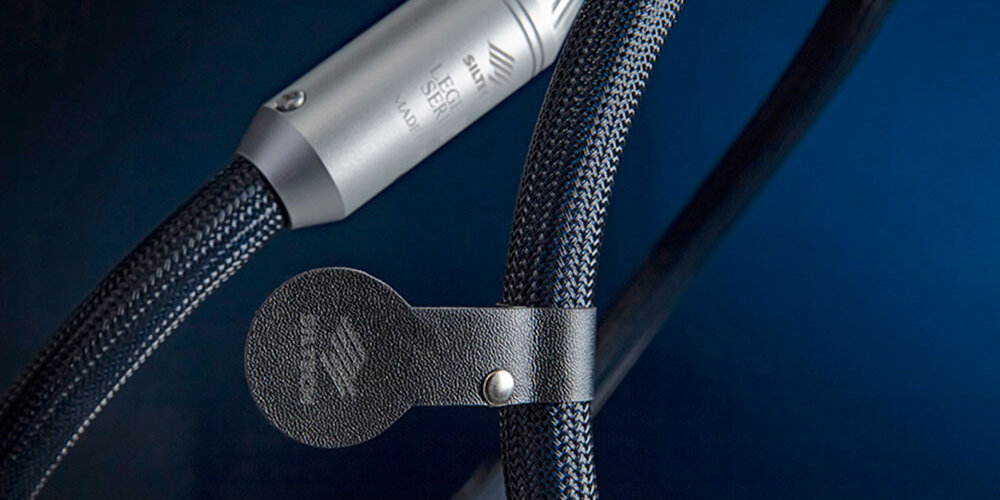
Selv i den sjeldne verdenen av ultra-high-end lyd, er byggekvaliteten til disse håndlagde Siltech SAGA System-komponentene enestående.
Jonathan Valin
To put this plainly, you would hear slightly more of the things that make Keb’ Mo’ sound “real” via both of these different gain strategies, along with a very slight reduction in the signal virtues at which each excels. Though the differences between these three presentations are subtle, they are quite clearly audible and their effect on perceived “realism” is marked, with the Siltech SAGA System holding a bit of an edge overall. Of course the Keb’ Mo’ cut is a piece of music that lives almost entirely in the midrange— and lives there without making great demands on a preamp/amp’s dynamic prowess. If we turn to something more challenging—such as George Crumb’s duo for violin and piano, Four Nocturnes, on Mainstream—the picture changes a bit. In this piece, highly percussive moments filled with staccato raps on the violin’s upper bout and the piano’s case, as well as explosive Bartók pizzicatos on both violin and open piano strings, alternate with more lyrical passages (wraith-like harmonics on violin and “prepared” piano, glissandos on both instruments that spill colors like prisms). Here, in a piece that is largely composed around mysterious and lovely nocturnal noises, the Soulution 500 Series electronics’ advantage in transient speed pays dividends in perceived realism. The 500s are simply quicker off the mark and more unstintingly explosive than the Audio Research gear. And yet…Four Nocturnes is also built around the evanescent bursts of tone colors that attend these transients and the way they die off into the nighttime silences that play such a large role in the structure of these miniatures. In timbre the ARC electronics holds the same advantages that it had with the Keb’ Mo’ piece. Even though the ARC components are not as quick or as complete on starting and stopping transients as the Soulution gear, they still hold a slight edge in naturalness of tone color, bloom, and dimensionality. Once again, the sound of the Siltech SAGA System falls almost exactly in-between these two paradigmatic examples of solid-state and tube electronics, with nearly the same speed on transients, the same resolution of very-low-level textural details, and the same wonderful preservation of decays that make the Soulution gear sound so exciting and realistically “present,” and nearly the same naturalness of tone color and three-dimensional body and bloom of the ARC gear. Plus the nighttime silences between notes and phrases really are deeper, more silent than through any other gear I have heard in my system. Though the Crumb recording is an LP, the greater dynamic range that the Siltech is capable of—and that Rynveld sought so cleverly to preserve—is clearly there, as are the lower noise and higher resolution that are its side benefits. Indeed, I’ve never before heard electronics which use tubes in their gain stages exhibit this kind of transient speed and ultra-lowlevel transient detail; nor have I heard any solid-state amplifier with quite this level of neutrality and naturalness of timbre (though the Soulution and Constellation come very close). How about large-scale music? Well, the story is more or less the same. On the new Acoustic Sounds’ reissue of Lieutenant Kije [LSC-1950], the Siltech matches the Soulution in extension and resolution on those big, floor-shaking bass drum strikes in “Kije’s Birth,” while at the same time very nearly matching the ARC’s peak-free loveliness on those sometimes piercing piccolos and flutes at the playfully martial start of the same movement. The SAGA has almost the same dark rich density of tone color and sheer weight as the Soulution on the marvelously sluggard passages for bassoons, tenor saxophone, and low-pitched brass in “[Kije’s] Romance,” and much (if not all) of the sheer silken gorgeousness of the ARC on massed strings. In short it has the same unique blend of tube and transistor virtues it has on other music. And this plays out in its staging and imaging, as well, with a mix of tube-like expansiveness and transistor focus that makes full orchestras sound both big and densely populated. Can the Siltech SAGA System rock? Well, it doesn’t have quite the phenomenal bass at very loud levels that the Soulution 500 Series monoblocks do, but then, as I noted in my review of the Soulutions in Issue 236, neither does anything else. That said, the SAGA System comes mighty close and outdoes the slightly (albeit beguilingly) softer-sounding Soulution in the treble on the timbre and dynamics of rhythm-marking instruments like cymbals and drumsticks (or, for that matter, the colorful accents of the tambourine and orchestral bells on Chad Kassem’s great new reissue of Debussy’s Iberia [LSC-2222]). No, the Siltech cannot fully match the Soulution’s bottom end on powerhouse rock—such as the Puget Sound twotrack, 15ips reel-to-reel tapes of Sgt. Pepper and L.A. Woman, where the drum kit and Fender bass don’t have all of the thunderous, you-are-there impact and definition of the all-solid-state Soulution. Not that the SAGA is at all muddy or anemic sounding. From the midbass through the power range the Siltech gear has color, clarity, resolution, and dynamics galore (just listen to the lifelike sock and thrilling tonal weight of the rhythm section on Janis’ “Try” from I Got Dem Ol’ Kozmic Blues Again Mama!); and the SAGA amp goes low (as low as the Soulution gear). It just doesn’t do these things with quite the same iron grip and punch-in-the-chest slam that the Soulution combo, with its damping factor of greater than 10,000 and much higher current capabilities, does. (Of course, the Siltech come far, far closer to the Soulution in these regards than the ARC electronics, but then tubes, even great ones, aren’t killers in the bottom octaves when it comes to grip.) On the other hand, if you want to hear what the SAGA does extraordinarily well, listen to the incomparable Karajan performance (with the Berlin Phil) of Bartók’s Music for Strings, Percussion and Celesta [Columbia SAX]. The Siltech’s lower noise, higher resolution, exceptionally natural and beautiful tone color, and astonishing dynamic range and discernment really pay benefits here in sheer clarity of line. For instance, I don’t think I’ve ever before heard as clearly the way that Bartók expands the tight chromatic intervals of his main theme in the first movement into wider, more tonal intervals when he repeats the same theme in the dance-like final movement. This is resolution that serves a purpose. (My thanks to our incredibly knowledgeable Music Editor, Mr. Lehman, for helping me to phrase this correctly.) To sum up, the Siltech SAGA System is not only engineered like nothing else; it sounds like nothing else—or at least nothing else I’ve heard. With its unique blend of tube-like bloom, three-dimensionality, and naturalness of timbre, and solid-state-like transient speed, resolution, bass-range extension and clarity, and extremely low noise, it truly does bridge the gap between these two gain strategies in ways that will delight both tube-o-philes and solid-state mavens, combining the most salient virtues of each device with a satisfying completeness that has never before been achieved in a single package. For this alone, it is a landmark piece of audio engineering. That it also raises the bar in the realistic reproduction of music of all kinds, particularly in the midband, makes it a no-brainer highest recommendation— and my new and, uh, one-and-only tube/transistor-hybrid reference. As soon as you lift the SAGA units out of their cartons— those of you who are lucky enough to be able to afford them—you will see that your money was well spent. Even in the rarefied world of ultra-high-end audio, the build-quality of these hand-made Siltech SAGA System components is outstanding. The SAGA’s three incredibly solid and well-damped chassis (you can actually do a knuckle-rap test on them, as if they were the side-panels of a Magico loudspeaker) were designed using a CO MSOL Multiphysics finite-element-analysis program; its RC A I/Os are all top-line WBT Nextgens; its XLR I/Os are gold-plated Neutriks. Though you will need an extra set of balanced interconnects to go from the V1 voltage amplifier to the P1 current amplifier—and be sure to select a very, very good set (such as Crystal Cable Absolute Dreams, Synergistic Research’s fabulous new Galileo LE, or Siltech’s own top-line Royal Signature silver-monocrystal wire, which is what is used inside the SAGAs)—you will quickly find that setting up the SAGA system and operating it are a snap, thanks in part to the logical simplicity of its controls, inputs, and outputs. The C1 preamplifier, for example, only has three adjustments on its front panel: a large, lighted (the light can be dimmed via the remote control), smoothly operating, centrally located dial for setting volume level— with a blue LED set like a pointer at its circumference to show you where you are on in the dial’s arc of travel—a row of six pushbuttons below the volume dial to select your source from one of six inputs, and two buttons which light up when you press them, one to turn the unit on and off, and the other to put it into “forced charging” mode (for more about which, see below). On the C1’s rear panel you’ll find six inputs (five RC A and one XLR) plus two pairs of outputs (one RC A and one XLR). As Siltech’s manual points out, the first inputs you should try are Numbers 5 and 6, as they have shorter paths to the circuit board and sound better. A system power-on switch is also located in the right rear corner of the back panel. The V1 voltage amplifier has only two pushbuttons on its front panel, which also light up when pressed and serve the same functions as the two pushbuttons on the C1—turning the amplifier on and off and engaging its “forced charging” function. On its rear panel, the V1 has two pairs of XLR outputs, plus two stereo inputs (one RC A and one XLR). The two pairs of stereo outputs are there in case you decide to biamp your loudspeakers by buying a second P1 unit. As with the C1, a system power-on switch is located in the right rear corner of the back panel. On the bottom of the V1 chassis, near the front panel, is another switch that allows you to choose between the two completely independent triode and pentode circuits built into the unit (only one at a time is active). Your choice of circuit will, to some extent, be dictated by the sensitivity of your loudspeakers. But all other things being equal, the sound of the SAGA System is sweeter, richer, and more finely textured when the V1 is played in triode mode, although you may prefer the greater dynamism and leaner tonal palette of the pentode mode on certain kinds of music. The P1 current amplifier has two pushbuttons on its front panel—one to turn the unit on and off, and one to mute the amp’s output. Each lights up when depressed. On its rear panel are one set of balanced stereo inputs, loudspeaker binding posts (the very best, gold-plated, high-current WBT s, of course), and an IEC inlet for an AC power cord—the only IEC inlet on any of the chassis, as the P1 is the only unit that plugs directly into the wall. Both the battery-powered C1 and battery-powered V1 come with “charging units” with long cords that plug and lock (via a rotating collar) into the DC-In jacks on the rear panels of each component. The chargers have multi-color LEDs built into them, which glow green when the batteries in the V1 and P1 are fully charged, and the chargers are no longer functioning. As these chargers require low voltage to operate, they can be plugged into a power strip rather than occupying a wall socket that could be used for something that’s directly powered by AC (such as the P1). A word about battery operation. The batteries in the C1 and V1 need about eight hours to fully charge (twelve hours when the units are initially plugged in). Once charged, the batteries will have sufficient current to power the units for twelve to fifteen hours of play. When the batteries near exhaustion (or the C1 and V1 are turned off for the evening), the chargers will automatically re-charge the batteries. (The SAGA System can be played while the batteries are charging—at very first turn-on, for instance—by pressing the “forced charging” buttons on the C1 and V1. The sound is excellent, BT W, if not quite as sophisticated as it becomes when the units are being fully powered by their batteries.) The life of the batteries in the C1 and V1 is said to be 5–10 years (with replacement recommended every five years for best sound). The life of the tubes in each of these units is said to be 10,000 hours, with best sound for the first 5000–8000 hours. Let me say another word about batteries and hi-fi components. Past experience with gear powered by battery supplies led me to expect mixed results from the SAGA System. In the past, such battery-powered systems have been quiet, yes, and high in resolution, but they have also been dynamically hamstrung, sounding overly polite on transients and big dynamic swings, and also rather whitish in timbre. The SAGA System is the first battery-powered preamp and amp I’ve heard that has none of these issues. On the contrary (and as noted in the review), the SAGA is almost as fast and powerful as the fastest and most powerful solid-state amp I’ve heard, and very nearly (if not completely on some instruments like strings) as voluptuously beautiful in timbre as the most beautiful and realistic tube amp I’ve heard. Clearly, huge strides have been made in the design of battery-powered high-end components. The SAGA comes with a cool-looking, touchscreen Logitech Harmony remote control and handsome cradle-like charger. This remote repeats the functions found on the C1 preamp—allowing you to change volume and choose sources from a distance. It also allows you to mute the system, to put the C1 into “forced charging” mode, and to dim the C1s frontpanel lights. What it does not do—what the SAGA System itself does not do—is, well, anything else. There are no tone controls, no loudness controls, no stereo/mono or polarityreversal buttons on the remote, because none of these functions are built into the preamp. While there are some listeners (including some on this magazine) who would positively tear their hair out because of these omissions, I applaud them. Putting aside the fact that I have little hair of my own to tear, most of these functions (the stereo/mono switch would be my sole exception) are not only unnecessary; they also add active circuitry—and with that circuitry, conduits of external noise and distortion—to devices that, in this instance, were expressly and elaborately designed to eliminate all sources of noise and distortion. There was a reason why these silly, imprecise, noisy controls fell out of favor at the beginning of the high-end era. In every way conceivable (including this one), the SAGA System is a return to the purist ideal that got the high-end ball rolling in the first place. In the SAGA System, all that needs to be there for highest-fidelity reproduction is there; anything else isn’t. Do note that each of the SAGA System components should be wired up to sources and to each other before you power anything up. This is simply good practice, but violating this dictum may also void the warranty.